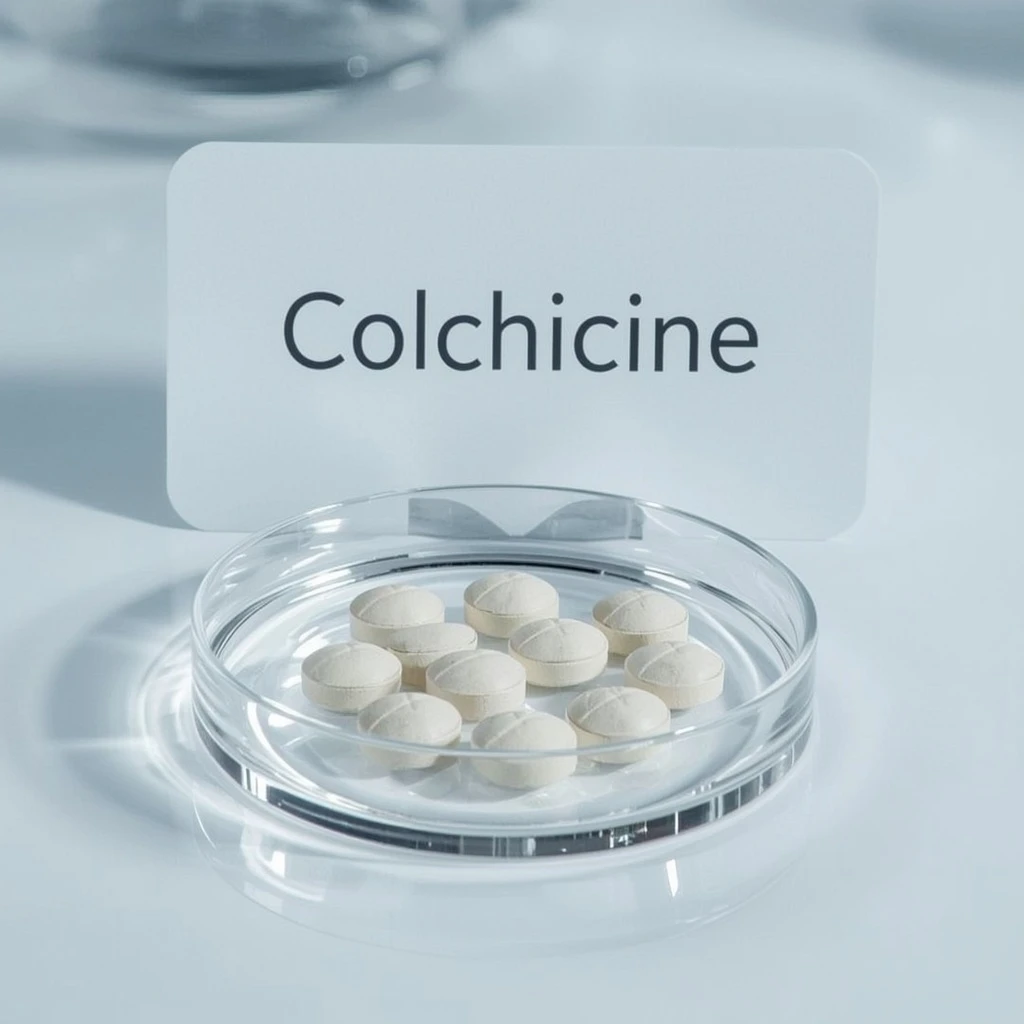
Colchicine is best known as a treatment for gout, a painful form of inflammatory arthritis caused by uric acid crystal deposits in the joints. During a gout flare, joints—often the big toe, ankle, or knee—become intensely painful, red, and swollen. Colchicine does not dissolve uric acid crystals; instead, it calms the inflammatory reaction that your immune system mounts against those crystals, reducing pain and swelling over hours to days.
In addition to acute gout attacks, Colchicine is frequently used in low daily doses to prevent recurrent gout flares, especially in people starting uric acid–lowering therapy such as allopurinol or febuxostat. These medications can temporarily increase the risk of flares as uric acid levels shift; Colchicine stabilizes inflammation during this vulnerable period. Many rheumatologists also recommend ongoing prophylactic Colchicine in patients with frequent attacks, to improve quality of life and preserve joint function.
Beyond gout, Colchicine has carefully defined roles in other inflammatory conditions. It is used in familial Mediterranean fever (FMF) to prevent painful inflammatory episodes and long-term complications like amyloidosis. Cardiologists sometimes prescribe Colchicine as part of treatment for pericarditis (inflammation of the sac around the heart) or to reduce recurrent pericarditis episodes. In each of these situations, the same principle applies: Colchicine acts on inflammatory cells to reduce their activity and migration, thereby limiting tissue damage and pain.
Because seniors often live with multiple chronic diseases, Colchicine can be part of a broader arthritis and inflammation management plan. When used correctly and monitored appropriately, it can reduce the need for higher doses of nonsteroidal anti-inflammatory drugs (NSAIDs) or steroids, which may be more dangerous for older adults. However, it is not a universal pain medication and should not be used casually for every ache; Colchicine is most appropriate when a clinician has confirmed a gout diagnosis or another approved indication.
Colchicine dosing must be precise. The margin between an effective dose and a harmful dose is narrow, so you should always follow individualized instructions from a qualified medical professional. For an acute gout flare in adults, a common modern regimen is to take 1.2 mg at the first sign of a flare, followed by 0.6 mg one hour later. After that, some people continue 0.6 mg once or twice daily until the attack improves, according to their clinician’s guidance. Older, high-dose regimens (small tablets taken every hour until diarrhea) are outdated and unsafe.
Visitors looking into Colchicine frequently continue browsing our pharmacy to learn about other widely prescribed medications that may be used for different medical conditions. Many customers appreciate having access to a broad selection of trusted prescription products from a single source instead of searching across multiple websites. Another highly requested medicine in our catalog is Prednisone, which remains one of our most popular product pages. If you would like to compare available treatments, you can also buy prednisone online and review additional information.
For gout prevention, doses are usually lower and more consistent, such as 0.6 mg once or twice daily, adjusted for kidney function, age, and tolerance. In familial Mediterranean fever or pericarditis, the dose and schedule may differ and are typically tailored by a specialist. Seniors and people with kidney or liver impairment frequently need reduced doses or longer intervals between doses to avoid accumulation and toxicity, making professional oversight critical.
Colchicine is taken by mouth with a glass of water and can be taken with or without food. Taking it with food may reduce stomach upset, although gastrointestinal side effects can still occur. You should swallow the tablets whole and avoid crushing or chewing unless your pharmacist has specifically provided a formulation designed for that purpose. Consistency matters—try to take your maintenance doses at the same time each day to maintain a steady level in your bloodstream.
Never increase your dose on your own, even if pain feels severe or a flare seems to be lingering. Unlike over-the-counter pain medications, doubling up on Colchicine can be dangerous rather than simply ineffective. If your symptoms are not improving, the right response is to contact a professional for reassessment, not to self-escalate the dose. At Heritage Senior Center, staff can review your current regimen, symptoms, and other medications to determine whether dosing adjustments, an alternative treatment, or further evaluation are needed.
Before starting Colchicine, it is important to review your full medical history and medication list with a knowledgeable professional. Colchicine is processed and cleared through both the liver and kidneys. If you have chronic kidney disease, reduced kidney function, or liver disease, you may require a significantly lower dose or may not be a candidate for Colchicine at all. Seniors are especially prone to decreased kidney function, even when lab numbers do not look dramatically abnormal, so conservative dosing is common in older adults.
Pre-existing blood disorders, neuromuscular diseases, or gastrointestinal problems may increase the risk of complications. Colchicine can, in rare but serious cases, suppress bone marrow, leading to low white blood cells, anemia, or low platelets. It can also cause nerve and muscle problems, including weakness and pain, particularly when combined with certain cholesterol medications or in individuals with underlying neuromuscular conditions. Inform your clinician if you have ever had unexplained muscle pain, numbness, tingling, or frequent infections.
Alcohol intake is another key consideration. While moderate alcohol may not be absolutely prohibited, alcohol can trigger gout flares and strain the liver. Heavy drinking combined with Colchicine increases the risk of liver injury, worsened gout control, and medication errors. Many seniors take multiple medications that may already affect the liver, so it is wise to limit alcohol and discuss safe levels with your provider or the staff at Heritage Senior Center before starting or continuing Colchicine.
Pregnant and breastfeeding individuals must also use caution. Colchicine crosses the placenta and is present in breast milk. In certain inherited conditions like familial Mediterranean fever, specialists may still recommend Colchicine during pregnancy, but this is a nuanced, individualized decision. Anyone who is pregnant, planning pregnancy, or breastfeeding should not take Colchicine without direct medical guidance. In older adults, this is less commonly an issue, but caregivers and family members should be aware if helping manage medications for younger relatives.
Colchicine is contraindicated in people who have had a serious allergic reaction to the drug in the past. Although true allergy is uncommon, symptoms such as widespread rash, severe itching, swelling of the face or throat, and difficulty breathing after taking Colchicine should be considered an emergency and a permanent reason to avoid the medication. Always tell clinicians about any past reactions to Colchicine or similar medications so they can document this clearly and choose alternatives.
Severe kidney or liver impairment, especially when combined with certain other medications, can also make Colchicine use unsafe. In some situations, the combination of organ impairment and potent interacting drugs (such as strong CYP3A4 or P-glycoprotein inhibitors) is an absolute contraindication because of the high risk of fatal toxicity. For example, using standard doses of Colchicine together with certain powerful antifungals or antibiotics in someone with advanced kidney disease could quickly lead to dangerous blood levels.
Another important contraindication is pre-existing serious blood dyscrasias or unexplained low blood cell counts. Since Colchicine can affect bone marrow function, people with significant, poorly understood hematologic conditions may face an unacceptable risk if they start this medication. At a minimum, baseline blood counts should be checked and abnormalities evaluated before initiating therapy. Seniors, who are more likely to have hidden nutritional deficiencies or bone marrow disorders, particularly benefit from this cautious approach.
Finally, some clinicians avoid Colchicine in individuals who cannot reliably follow dosing instructions or monitoring plans, such as those with significant cognitive impairment and no support system. Because dosing errors and inadvertent overdoses are dangerous, the presence of a caregiver, structured medication management program, or supervised setting like Heritage Senior Center can be crucial. In such environments, even vulnerable patients can use Colchicine more safely under guidance.
Gastrointestinal side effects are the most common with Colchicine. Many patients experience nausea, stomach pain, cramping, vomiting, or diarrhea, especially at higher doses or when starting treatment. Mild digestive upset may improve over time or with dose adjustment, but persistent or severe vomiting and diarrhea are warning signs and can lead to dehydration, particularly in older adults. If you notice blood in stools, inability to keep fluids down, or dizziness, prompt medical evaluation is important.
Less common but more serious side effects involve the muscles and nerves. Colchicine can cause muscle weakness, pain, tenderness, or dark urine, which may indicate muscle breakdown (myopathy or, rarely, rhabdomyolysis). These problems are more likely when Colchicine is combined with certain statins or other cholesterol-lowering drugs, or in people with kidney disease. Numbness, tingling, or burning sensations in the hands and feet can signal nerve involvement. Seniors, who frequently take statins and may already have neuropathy, should be monitored closely.
Rarely, Colchicine can suppress the bone marrow, reducing the production of blood cells. Signs include frequent infections, fevers without an obvious cause, unusual bruising, or prolonged bleeding from minor cuts. Pale skin, fatigue, and shortness of breath may reflect anemia. While these events are uncommon at standard doses, the risk increases with long-term use, higher cumulative doses, kidney or liver disease, and interacting medications. Periodic blood tests are often recommended during chronic therapy.
Other potential adverse reactions include hair thinning, rash, or changes in liver enzymes on blood tests. Any sudden or severe symptom—chest pain, trouble breathing, facial swelling, or confusion—requires immediate medical attention. Heritage Senior Center emphasizes education so residents recognize early warning signs and know when to seek urgent evaluation. Rapid response is vital because timely discontinuation and supportive care can prevent progression to life-threatening toxicity.
Colchicine is involved in many clinically significant drug interactions, primarily through the CYP3A4 enzyme system and the P-glycoprotein (P-gp) transporter in the liver and intestines. Medications that block these pathways can cause Colchicine to accumulate to dangerous levels, even when you are taking a seemingly standard dose. Strong CYP3A4 inhibitors include certain antifungals (like ketoconazole and itraconazole), some macrolide antibiotics (such as clarithromycin), certain HIV and hepatitis C medications, and some calcium channel blockers.
P-glycoprotein inhibitors overlap partly with CYP3A4 inhibitors but also include additional heart and blood pressure medications, as well as some antiarrhythmics. When these drugs are combined with Colchicine, especially in people with kidney or liver problems, the risk of serious toxicity rises sharply. In some combinations, Colchicine should be avoided completely; in others, a substantially reduced dose and close monitoring may make its use possible under specialist supervision.
Statins and fibrates, widely used for cholesterol control, can interact with Colchicine at the level of muscle tissue. Both classes of medications independently carry a risk of muscle damage; together, the chance of myopathy or rhabdomyolysis may increase, particularly in older adults and those with kidney impairment. If you are taking a statin, report any new muscle pain or weakness immediately, and ensure that all of your prescribers are aware you use Colchicine.
Because many seniors take multiple medications, supplements, and over-the-counter products, comprehensive medication review is essential. Herbal products and grapefruit juice can also affect drug-metabolizing enzymes. At Heritage Senior Center, medication lists can be carefully reconciled, and pharmacists or clinicians can flag dangerous combinations before they cause harm. Never start or stop any prescription, over-the-counter drug, or supplement without considering its interaction potential with Colchicine.
For people taking Colchicine on a regular schedule for gout prevention or other chronic indications, a missed dose is usually not an emergency. If you remember within a few hours, take the missed tablet as soon as you recall. If it is close to the time of your next scheduled dose, simply skip the missed one and resume your regular schedule. Do not double dose or take extra tablets to “catch up,” as this increases the risk of side effects without meaningfully improving symptom control.
In the context of an acute gout flare, timing is more important. Starting Colchicine early in a flare tends to produce better pain relief. If you forget the second loading dose during flare treatment, do not take multiple tablets at once later. Instead, follow the instructions provided for the flare regimen as best as you can remember and consult a clinician if pain remains severe or you are unsure how to proceed. Written instructions or printed schedules from Heritage Senior Center can be very helpful in these situations.
Frequent missed doses may indicate that the schedule is too complex, that side effects are discouraging adherence, or that memory challenges are interfering. Seniors dealing with multiple medications may benefit from pill organizers, reminder systems, or supervised medication administration. The team at Heritage Senior Center can help organize medications, adjust dosing times around meals or sleep, and coordinate with families or caregivers so Colchicine is taken accurately and safely.
Colchicine overdose is a medical emergency and can be life-threatening. Because the therapeutic and toxic doses are relatively close, even taking “a few extra tablets” can be dangerous, especially in small or frail individuals. Early symptoms of overdose often resemble severe gastrointestinal upset: intense nausea, vomiting, abdominal pain, and profuse diarrhea. This can quickly lead to dehydration, electrolyte imbalances, and shock if left untreated.
As toxicity progresses, more serious complications may develop over the next 24–72 hours. These can include low blood pressure, irregular heartbeat, difficulty breathing, confusion, multi-organ failure, and profound bone marrow suppression. Some patients experience muscle breakdown, kidney failure, and severe infections. Because these later effects can be delayed, anyone suspected of having taken too much Colchicine should be evaluated urgently, even if they initially feel only mildly unwell.
If you or someone you are caring for may have taken an overdose of Colchicine, do not wait for symptoms to worsen. Call emergency services or your local poison control center immediately and follow their instructions. Do not attempt home remedies, and do not try to induce vomiting unless specifically directed by medical professionals. Bring the medication bottle or list with you to the hospital so the exact dose and formulation can be verified.
In supportive environments like Heritage Senior Center, systems are in place to reduce overdose risk: locked medication storage, supervised administration, clear labeling, and education about safe dosing. Prompt recognition of symptoms and quick access to emergency care can be lifesaving. The emphasis is always on prevention through careful dosing, thorough review of all medicines, and ongoing education for seniors and caregivers.
Proper storage of Colchicine helps preserve its potency and prevents accidental ingestion, particularly by children or pets. Keep Colchicine tablets in their original, child-resistant container with the label intact, so dosing instructions and expiration dates remain visible. Store the container at room temperature, generally between 68°F and 77°F (20°C to 25°C), away from direct sunlight, excess heat, or moisture. Bathrooms and kitchens, where humidity fluctuates, are not ideal storage locations.
Always keep Colchicine out of reach and out of sight of children and visitors. Because the tablets are small, they can be easily mistaken for candy or vitamins. Even a few tablets can cause serious harm in a child. Seniors who live with grandchildren or who have visiting family members should be particularly strict about safe storage. If you use pill organizers, ensure they are also kept in secure locations and clearly labeled to prevent mix-ups with other medications.
Check the expiration date regularly and do not use Colchicine that is past its expiration. While expired medication may simply be less effective, there is no guarantee of stability, and using fresh, in-date tablets is safer and more predictable. If you have leftover or outdated Colchicine, do not throw it directly into the trash or flush it unless local guidelines specifically advise it. Ask a pharmacist or staff at Heritage Senior Center about medication take-back programs or recommended disposal methods.
If you travel, carry Colchicine in your hand luggage, in its labeled container, and keep it away from extreme temperatures. For seniors who move between home and assisted living or day programs, coordination between settings can prevent duplicated supplies, confusion over dosing, and improper storage. Clear communication and centralized medication management, as offered at Heritage Senior Center, help maintain safety wherever you are.
In the United States, Colchicine is classified as a prescription-only medication. Historically, over-the-counter or loosely regulated formulations led to problems with inconsistent dosing and safety. Modern regulatory standards require that Colchicine be dispensed under professional supervision, with clear labeling and robust quality control. This protects patients by ensuring that the dose, formulation, and instructions are appropriate for their specific health status and that interactions and contraindications are evaluated.
At the same time, the requirement for a formal prescription can create access barriers, especially for seniors who struggle with transportation, appointment scheduling, or fragmented medical records. Some older adults with stable gout management may find it difficult to obtain timely refills when flare-ups occur or when they transition between care settings. Others may be uninsured or underinsured, making traditional clinical visits and pharmacy markups financially challenging.
Heritage Senior Center offers a legal and structured solution for acquiring Colchicine without a traditional prescription in hand. Instead of unsupervised online purchasing or informal sharing of tablets, residents and participants can obtain Colchicine through a program overseen by qualified professionals. This model adheres to U.S. regulations by embedding medical assessment and ongoing oversight into the process, even when individuals do not personally manage a paper or electronic prescription.
Within Heritage Senior Center, clinicians review medical histories, current medications, and lab results, then authorize Colchicine use where appropriate. Dosing plans are tailored to the individual, and monitoring for side effects, drug interactions, and treatment effectiveness is continuous. Seniors gain the convenience of being able to buy Colchicine without prescription barriers, while still benefiting from safeguards equivalent to, or greater than, a conventional office-based prescribing system. This structure reduces the temptation to order Colchicine from unverified online sources and supports safer, more consistent management of gout and related inflammatory conditions.
Colchicine is a prescription medication most commonly used to prevent and treat gout flares and to manage familial Mediterranean fever (FMF). It works by reducing inflammation, especially in joints, and by decreasing the body’s inflammatory response that leads to pain, swelling, and redness.
Colchicine interferes with the movement and activity of white blood cells involved in inflammation. By blocking certain cellular processes (particularly microtubule formation), it reduces the inflammatory reaction that causes the sudden, intense pain and swelling of a gout attack and the recurrent inflammatory episodes seen in FMF.
Colchicine is mainly prescribed for:
• Prevention of recurrent gout flares
It may also be used off-label for conditions like pericarditis (inflammation of the heart lining) and certain inflammatory diseases, but that depends on specialist guidance.
Colchicine should be taken exactly as prescribed, usually by mouth with a full glass of water. It can be taken with or without food, but taking it with food may reduce stomach upset. For gout attacks, a higher dose may be taken at the start of an attack, followed by smaller doses. For prevention or chronic use, a lower, regular daily dose is typical.
Dosing varies by country and by patient factors, but a common acute gout regimen is:
• 0.6 mg once or twice daily as directed for a few days
How long does it take for colchicine to start working?
What are the most common side effects of colchicine?
• Nausea
• Diarrhea
These are usually dose-related and may improve if the dose is lowered. Persistent or severe gastrointestinal symptoms should be reported to a healthcare provider.
Though less common, serious side effects can include:
• Numbness or tingling in hands and feet
• Severe diarrhea or vomiting leading to dehydration
Colchicine poisoning can be life-threatening, especially with overdose or in people with kidney or liver problems.
Colchicine may not be appropriate for:
• Those with known allergy to colchicine
Pregnant or breastfeeding individuals should only use colchicine if the benefits clearly outweigh risks and under close medical supervision.
Yes, colchicine is often used long-term at low doses, especially for people with frequent gout attacks or familial Mediterranean fever. Long-term use requires periodic monitoring of kidney and liver function and blood counts. The lowest effective dose should always be used to minimize side effects.
Colchicine does not cure gout. It helps treat and prevent flares by reducing inflammation. Gout is a chronic condition related to high uric acid levels. Long-term management focuses on lowering uric acid with medications like allopurinol or febuxostat, while colchicine (or other anti-inflammatories) is often used to manage or prevent flares during this process.
You should avoid:
• Certain medications that increase colchicine levels (for example, clarithromycin, ketoconazole, some HIV medicines) unless your doctor has specifically adjusted doses
Always check with your doctor or pharmacist before starting new medications or supplements.
Moderate alcohol may be allowed for some people, but alcohol can trigger gout flares and can worsen liver problems. If you have gout, it is generally best to limit alcohol, especially beer and spirits. People with liver disease or frequent gout attacks may be advised to avoid alcohol entirely. Discuss this with your healthcare provider.
Data are limited. Colchicine has been used during pregnancy in certain conditions (like FMF) when the benefits outweigh risks, but this decision must be made with a specialist. Colchicine passes into breast milk in small amounts; some guidelines allow breastfeeding with monitoring, while others recommend caution. Always consult your obstetrician or rheumatologist before using colchicine in pregnancy or while breastfeeding.
If you miss a regular prophylactic dose, take it as soon as you remember unless it is almost time for your next dose. If it is close to the time for the next dose, skip the missed dose and resume your schedule. Do not double doses to make up for a missed one. For acute gout regimens, follow your doctor’s specific instructions.
Colchicine overdose is a medical emergency. Symptoms can include severe nausea, vomiting, diarrhea, abdominal pain, weakness, confusion, or difficulty breathing. If you suspect an overdose, seek emergency medical care or call emergency services/poison control immediately. Do not wait for symptoms to get worse.
Yes. Colchicine is processed in the liver and by transport proteins in the gut and kidneys. Strong inhibitors of these pathways can raise colchicine levels and increase toxicity. Examples include:
• Some antifungals (ketoconazole, itraconazole, voriconazole)
• Certain heart and blood pressure drugs (verapamil, diltiazem, amiodarone)
Is generic colchicine as effective as brand-name versions?
Can colchicine be used for conditions other than gout?
• Familial Mediterranean fever (FMF)
• Occasionally, other inflammatory or auto-inflammatory disorders
How does colchicine compare with NSAIDs for treating a gout attack?
Which is better for acute gout: colchicine or NSAIDs?
How does colchicine compare with corticosteroids (like prednisone) for gout?
Can colchicine replace allopurinol or febuxostat?
How does colchicine differ from probenecid and other uricosuric drugs?
Is colchicine safer than NSAIDs for people with kidney problems?
How does colchicine compare with biologic drugs used for gout (like IL-1 inhibitors)?
Why would a doctor choose colchicine instead of a COX-2 inhibitor (like celecoxib)?
• A history of peptic ulcer disease or GI bleeding
• Poor response or intolerance to COX-2 inhibitors
Is colchicine more effective than topical NSAIDs for joint pain?
How does colchicine compare with intra-articular steroid injections for gout?
Is colchicine better for preventing gout flares than low-dose NSAIDs?
• It has a long track record for flare prophylaxis
However, in others, low-dose NSAIDs may work well and be more familiar or accessible. The decision is individualized based on kidney function, cardiovascular risk, GI history, and prior response.
Colchicine’s most frequent side effects are gastrointestinal (nausea, diarrhea, abdominal pain), with serious toxicities at high doses or in susceptible patients. NSAIDs can cause stomach ulcers, bleeding, kidney problems, and increased blood pressure. Steroids can lead to weight gain, mood changes, elevated blood sugar, bone loss, and increased infection risk if used frequently or long-term. Colchicine is often chosen when the risks of NSAIDs or steroids outweigh their benefits, but careful dosing and monitoring are still essential.
Yes. Colchicine is commonly used in combination with:
• NSAIDs or steroids (occasionally, for difficult flares, under close supervision)